Honest guide to every iconic belitung granite boulder beach: best spots, trade-offs, photos, swimming, nearby stays and island-hopping tips.
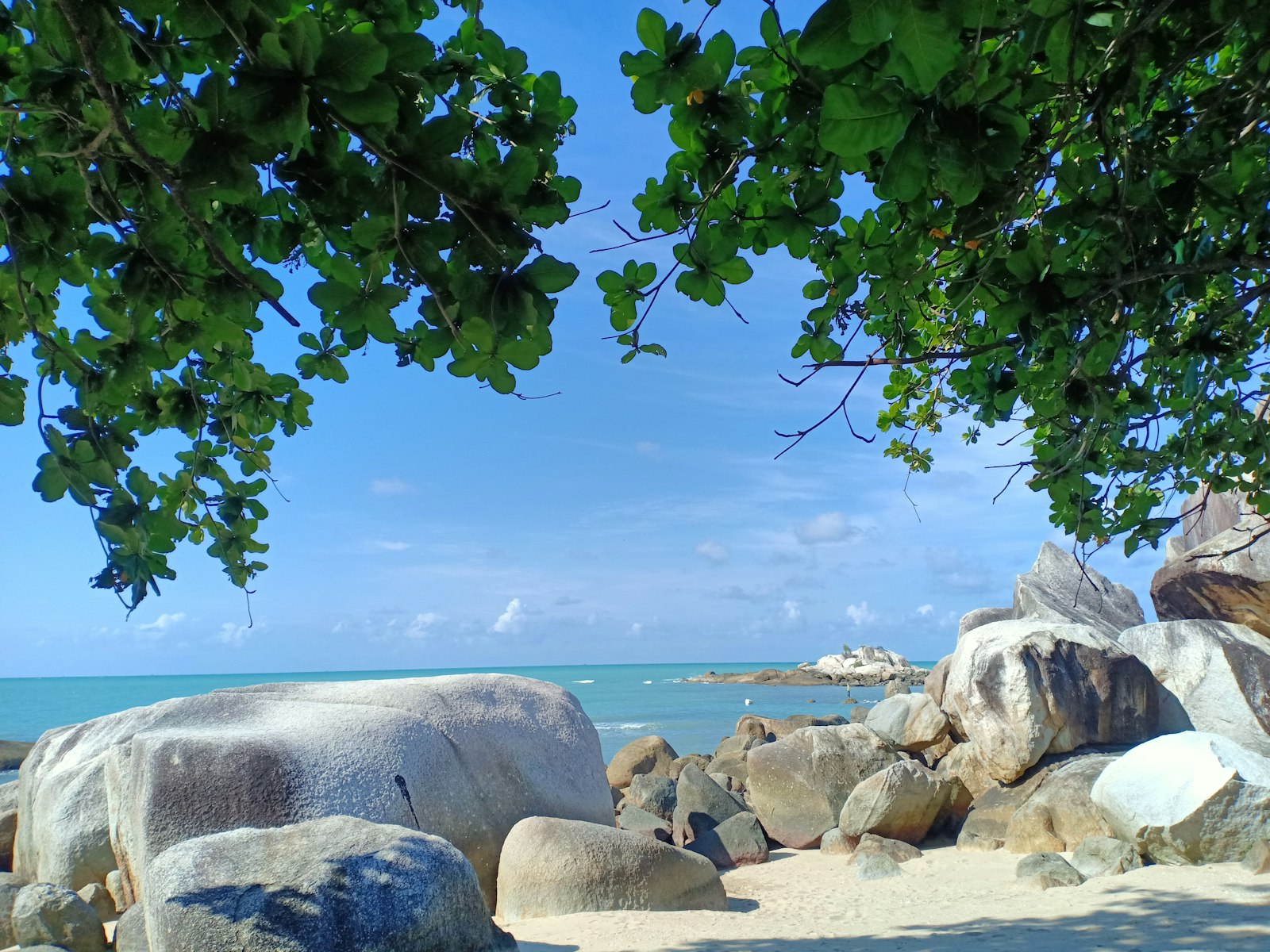
Belitung granite boulder beach landscapes are those pale-sand shores framed by huge rounded grey rocks sitting in clear turquoise shallows. On Belitung Island and its offshore islets, these weathered granite formations turn ordinary beaches into natural sculpture gardens you can walk, climb, and photograph from sunrise to sunset.
I’m Hartono, Lead Editor for Stays & Beaches at Belitung Villa. I spend a lot of time on these rocks — timing the tides, comparing coves, and stress-testing routes that actually work for guests in real conditions. This guide keys in on one thing: the granite rocks Belitung is famous for, and where to find the most impressive clusters on both the main island and nearby sand-fringed islets.
We’ll keep the geology high-level and honest (with [VERIFY] on anything that needs specialist confirmation), then go through the best Belitung boulder beaches, what it’s like to swim around the giant rocks Belitung beach areas are known for, and how to photograph them without a crowd in every frame. We’re a concierge-style guide, not a tour operator: we curate stays near these spots and help you book via vetted local partners, always by-quote and with real trade-offs.
Chapter 01
Why Belitung Has These Enormous Granite Boulders
Belitung isn’t just another white-sand island; it’s part of a larger granite belt that runs through this part of Indonesia and the wider region. That’s why the shoreline looks so different from Bali or Lombok.
Here’s the simple version of what’s going on — without pretending we’re a geology lab.
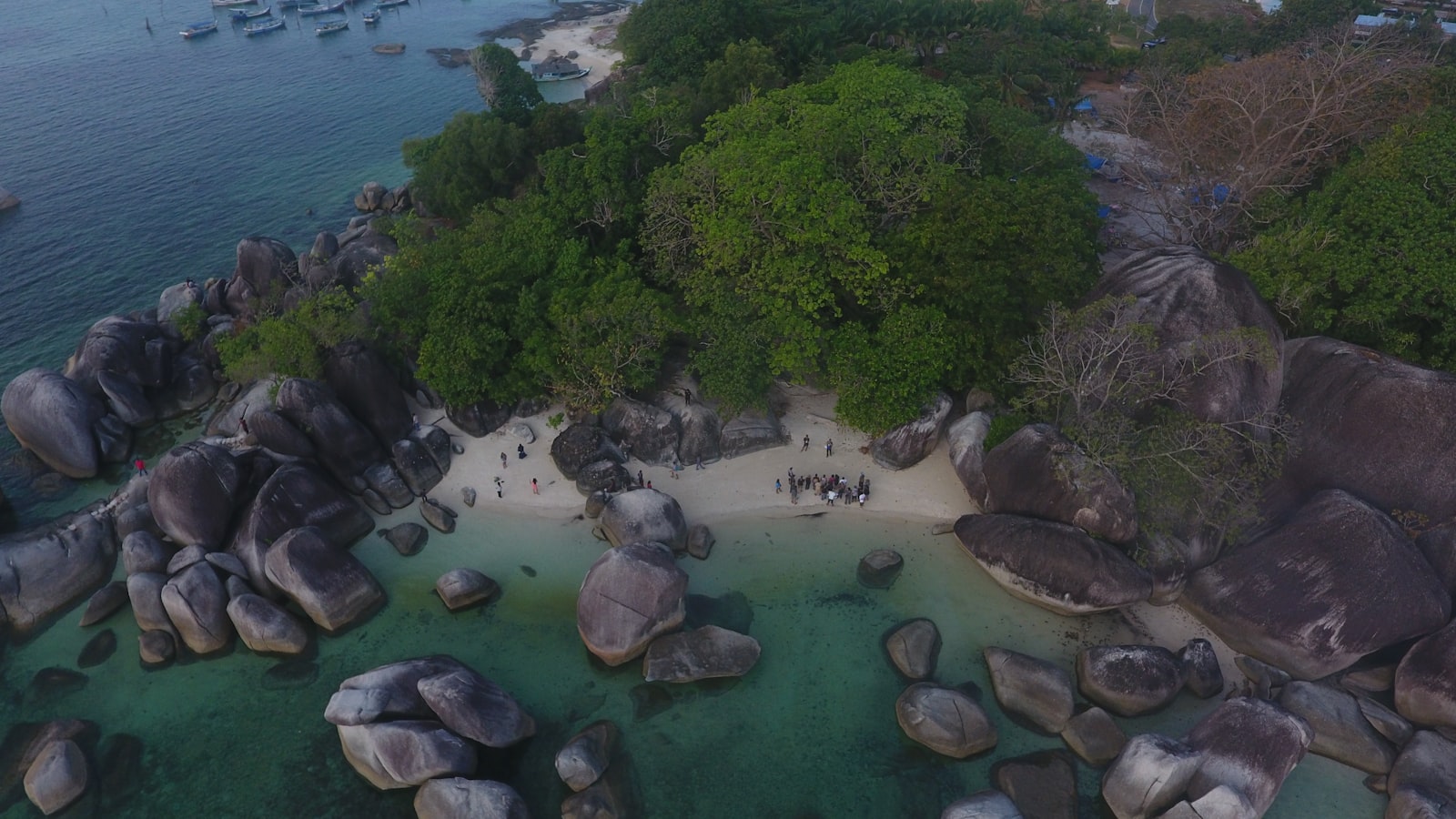
01Rounded granite spilling into a shallow cove.
01
Granite basics, the non-lecture version
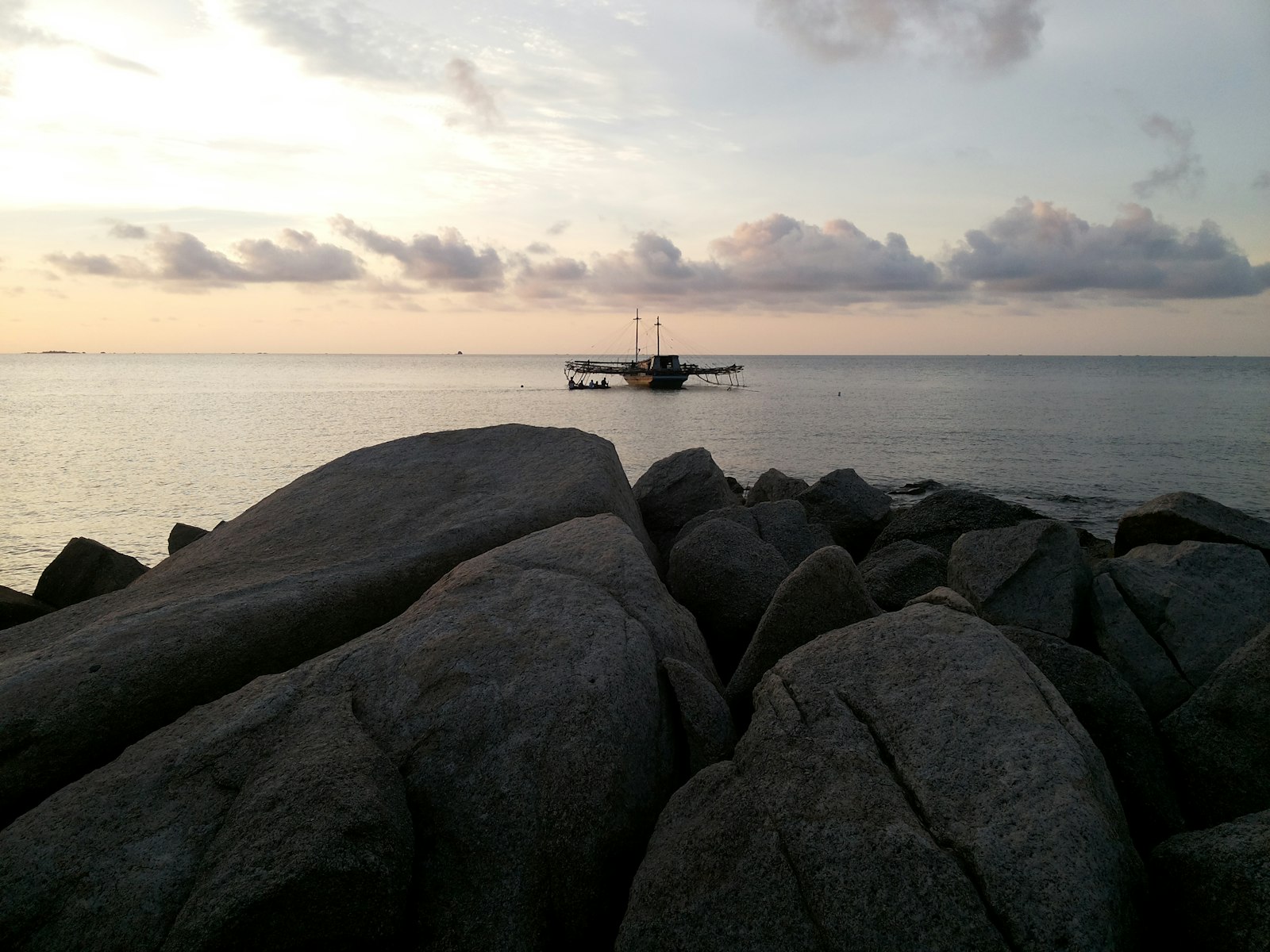
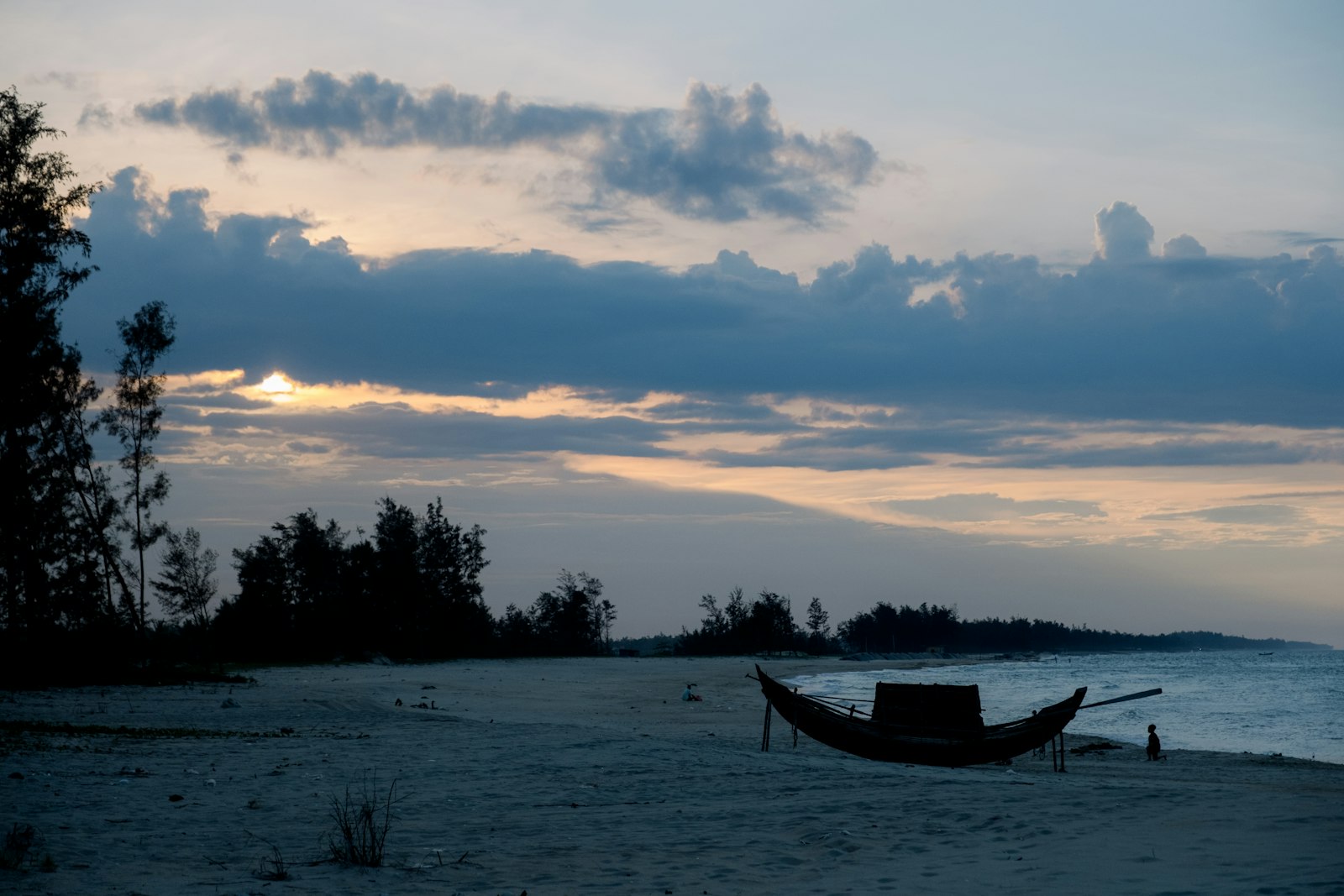
Dusk over the boulders, with a boat waiting offshore.
Granite is a hard, crystalline rock formed from cooled magma deep underground [VERIFY]. Over millions of years, softer surrounding rock erodes away. What’s left behind are the tougher chunks — the boulders you see scattered along Belitung’s coasts and islands.
On Belitung, those chunks are:
Mostly light grey, sometimes with specks of black and pink.
Often rounded or egg-shaped, smoothed by waves, rain, and chemical weathering [VERIFY].
Sometimes stacked into “towers” or tight clusters that feel almost designed.
You’ll notice:
Some boulders sit high and dry on the sand.
Others rise out of shallow water like whales.
In a few coves, they form tiny pools and narrow channels that kids love to explore (supervised — the rock can be slippery).
02
Why Belitung’s boulders feel so different to Seychelles or Thailand
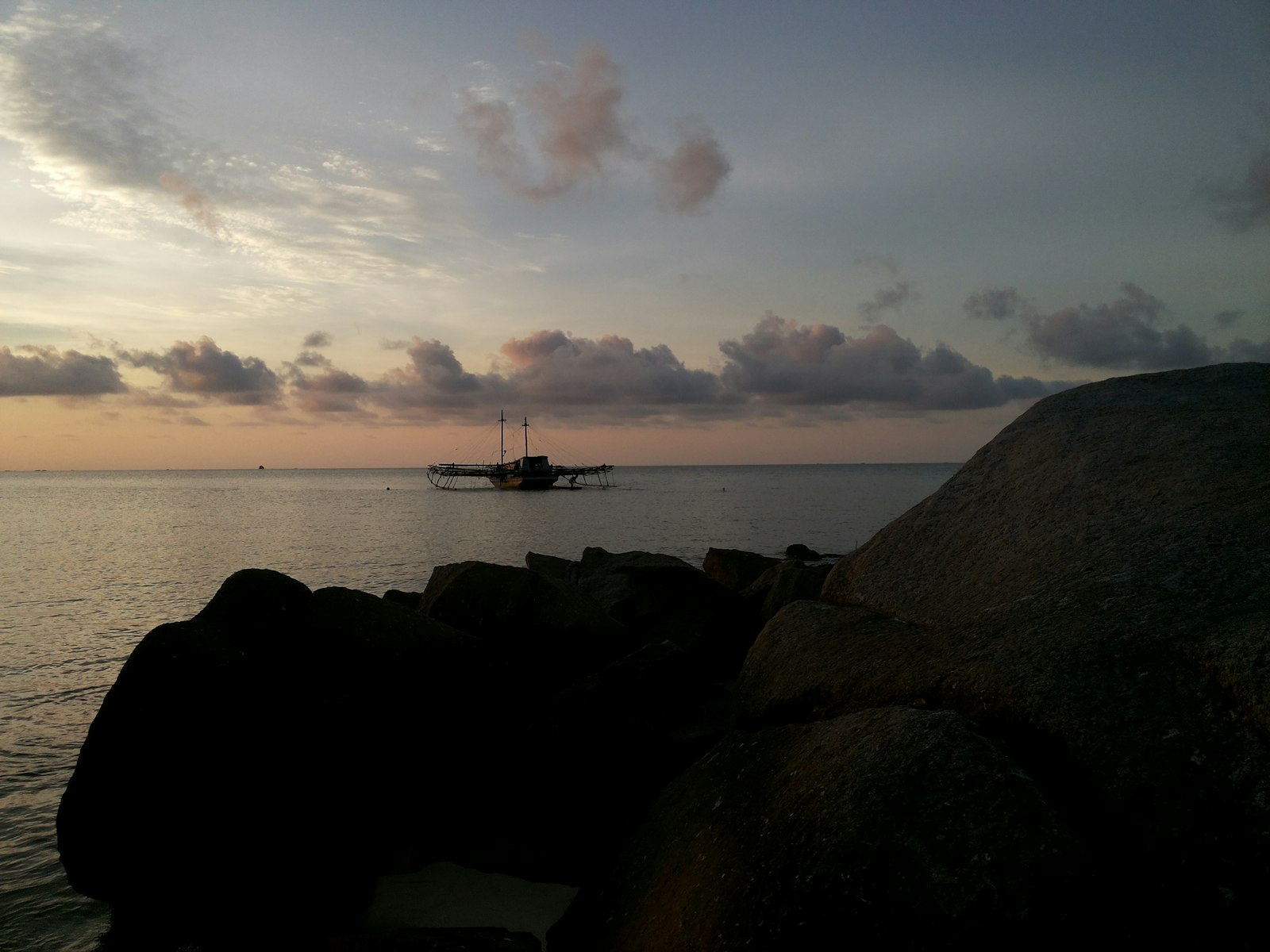
Granite and still water at the end of the day.
If you’ve seen images of Seychelles or some Andaman Sea islands, you’ll notice parallels: rounded granite, turquoise sea. The difference in Belitung is scale and spacing.
The giant rocks Belitung beach areas have tend to be:
Bigger in individual size in some clusters (multi-storey-building tall in places).
More spaced out, with broad sand between groups.
Often more accessible — you can walk up to them from the parking area without a long hike.
It feels less like jungle-meets-beach, more like a bright, wide-open “granite playground” with plenty of sky.
03
Where the boulders concentrate
You’ll find granite all around Belitung, but the dramatic clusters are:
On the northwest coast: especially Tanjung Tinggi and its neighbouring coves.
Around Tanjung Kelayang: larger blocks offshore and around the cape.
Scattered along the north and northeast coasts in smaller pockets.
Offshore on the small islands of the classic island-hopping loop: Lengkuas, Batu Berlayar, and a handful of nearby sandbars.
We’ll zoom into those next.
Chapter 02
The Best Belitung Boulder Beaches on the Main Island
If you only have 2–3 days, your “greatest hits” are on the northwest coast. Here’s how the key Belitung granite boulder beach areas compare.
02A boat pulled up for the night.
Beach
Why go
Best for
Trade-offs
Tanjung Tinggi
Classic granite bay with huge boulders & clear shallows
First-timers, photography, calm swimming
Can feel busy at mid-day, some basic warung vibe
Tanjung Kelayang
Long curve of sand with offshore rock formations
Sunset, island-hopping departures, easy access
Less dramatic boulders on the main beach itself
Small coves between Tinggi & Kelayang
Miniature “private-feel” granite corners
Quiet walks, couples, low-key photos
Limited facilities; tide can reduce swimmable area
North/east coast pockets
Scattered rock groups away from the main hubs
Explorers, people avoiding crowds entirely
More driving, basic infrastructure
For an overview of how these sit on the island, see our broader Belitung beaches guide — this page stays focused on the rockiest bits.
01
Tanjung Tinggi: Belitung’s poster-child granite bay
Long horizons rather than dramatic cliffs.
If you’ve seen one photo of Belitung, it was probably shot here. Tanjung Tinggi is the most famous Belitung boulder beach, and it earns the attention.
What you actually see on arrival:
A semi-enclosed bay of pale sand.
Shallow, usually calm water in shades of turquoise and sea-glass green.
Huge boulders ring the bay and spill into the sea; some are multi-storey high.
Smaller rocks create natural pockets and pools along the shoreline.
Why Tanjung Tinggi works so well:
Easy access: short walk from the parking area; no long hike.
Plenty of angles: you can shoot along the curve of the bay, up close with the rocks, or from elevated boulders.
Family-friendly: in normal conditions, the inside of the bay stays relatively calm compared with more exposed beaches.
Trade-offs to expect
Mid-day crowds in high season: tour groups, photographers, and day-trippers gather here.
Warungs and local vendors: good for snacks and drinks, but the overall vibe is informal rather than ultra-luxury.
Parking and paths can feel a bit chaotic during holiday peaks.
If you want to understand this beach more deeply, we keep a dedicated, up-to-date page at our Tanjung Tinggi guide — with tide notes, angles, and specific rock clusters to aim for.
02
Tanjung Kelayang: gateway to the islands, with granite in the distance
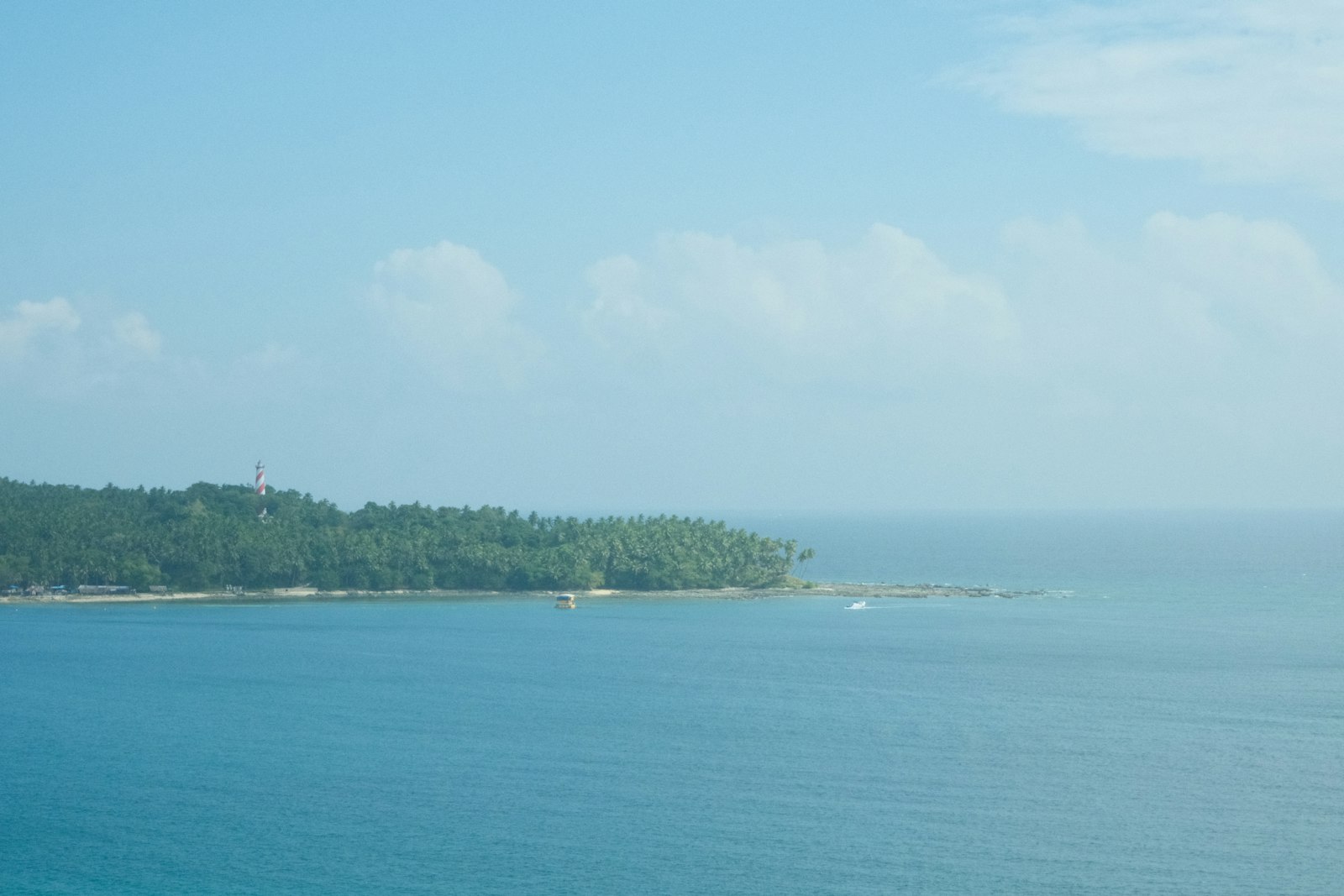
Low, flat islets scattered off the coast.
Tanjung Kelayang is the other anchor of Belitung’s northwest coast. The beach itself is a wide sweep of light sand with some granite at the ends and a few offshore groups of rocks.
What sets it apart
Island views: from the shore you can see small granite-topped islets and sandbars that you’ll later visit by boat.
Cape formations: walk north along the cape at lower tide and you’ll find interesting granite clusters with fewer people.
Practical base: it’s one of the main departure points for Belitung’s island-hopping routes.
Compared with Tanjung Tinggi
The rocks on the main strand are less dramatic, but:
You get more open feel and fewer tight crowds around any single boulder.
Sunset light can be excellent, with silhouettes of offshore rocks and boats.
If your priority is dramatic “between the giant rocks Belitung beach” shots, Tinggi wins. If you want an easy stroll, sunset, and a jump-off point for boat trips, Kelayang works well.
03
Quiet granite pockets between Tanjung Tinggi and Tanjung Kelayang
The stretch of coastline between these two big names hides smaller coves where granite boulders meet beach with far fewer people.
Expect
Pocket beaches only a few hundred metres long.
Clusters of boulders creating natural “rooms” along the shore.
Simple access via small roads and paths, sometimes with very basic stalls or no services at all.
These spots are ideal if you:
Want photos without other people in the background.
Prefer to sit with a book against warm rock, not a row of sunbeds.
Don’t mind less infrastructure and bring your own drinks and towels.
We don’t list every cove here on purpose — things change and paths can erode. If you’d like a current short-list based on your dates and mobility needs, plan your trip with us or WhatsApp +62 811 3941 4563 and we’ll match you with a vetted driver-guide who actually knows which access tracks are open.
04
Eastern and northern pockets: for granite chasers with more time
Drive farther from the northwest hub and you’ll find more isolated stretches of sand with smaller granite groups. The feel is more local, the infrastructure simpler, but the sense of space is huge.
We recommend these only if:
You have at least 3–4 days on the island.
You enjoy quiet, less “managed” beaches.
You’re happy with simple roadside food and fewer English menus.
The main argument for going this far is atmosphere rather than sheer boulder scale. The biggest granite spectacle remains around Tinggi, Kelayang, and the offshore islets.
Chapter 03
Granite Offshore: Island-Hopping with Boulders and Sandbars
Belitung’s islands share the same granite DNA, so the look continues offshore: white sand, clear water, and giant rocks rising straight from the sea.
The classic loop from Tanjung Kelayang hits a few key spots with boulders:
Lengkuas Island
Batu Berlayar
Several small unnamed sandbars with rock clusters
For the full step-by-step, read our dedicated Belitung island-hopping route. Here, we’ll focus on how the granite plays into each stop.
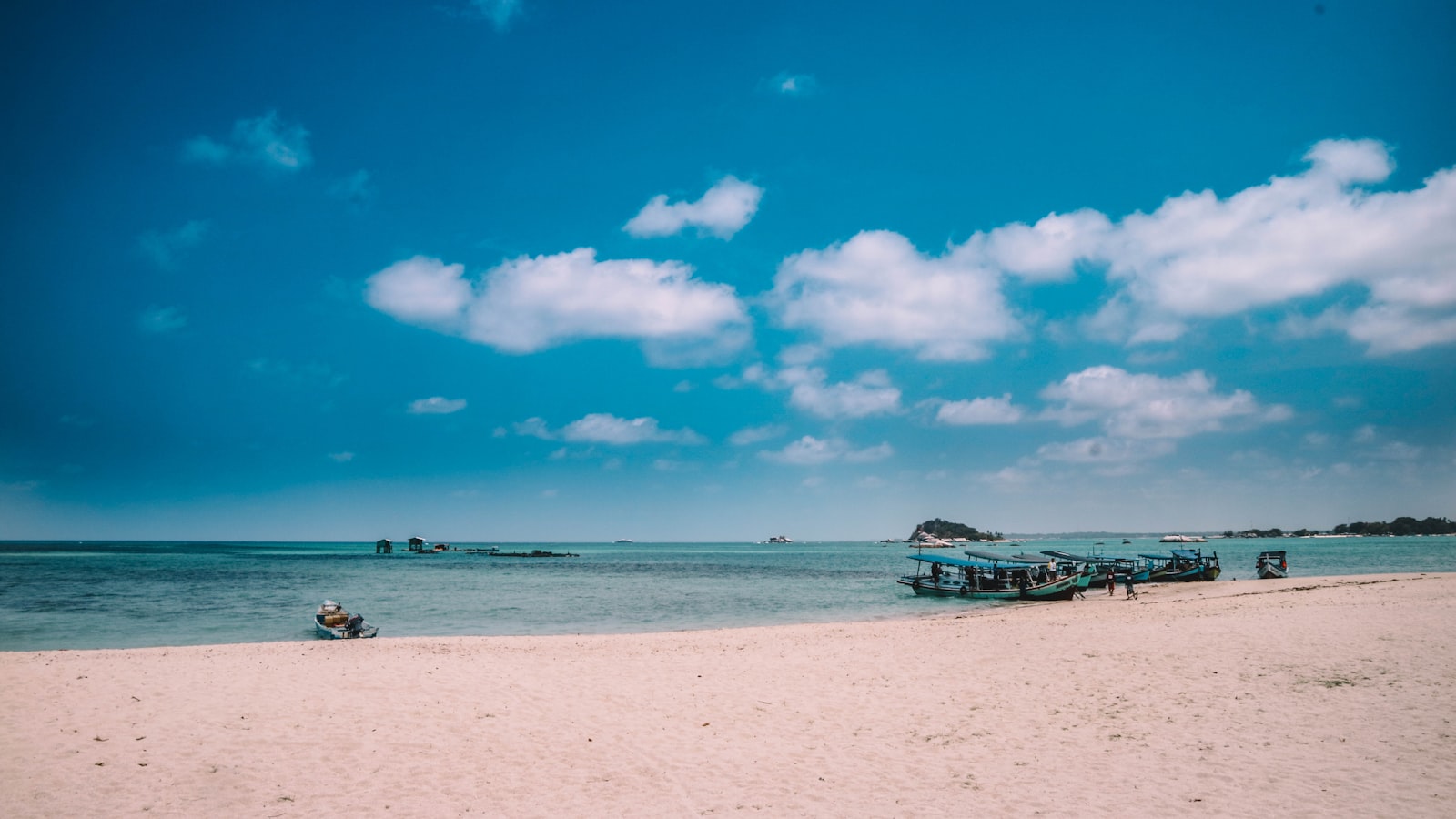
03White sand and moored boats — the everyday view along Belitung’s northwest coast.
01
Lengkuas Island: lighthouse views over granite and reef
Lengkuas is the most famous offshore stop. The beach is short but photogenic, framed by rounded granite and a historic lighthouse [VERIFY] overlooking shallow coral areas.
Granite experience here
Boulders on and around the beach for foreground interest.
Rock outcrops slightly offshore in shallow water — snorkelling around them gives a nice “reef plus rock” view.
Elevated view from the lighthouse (when access is open) that shows the arrangement of boulders, reef shelves, and sand.
Trade-offs
This is a popular stop; expect other boats.
Photography takes a bit more patience if you want “empty” scenes.
02
Batu Berlayar: the classic “rock sails” in the sea
Granite runs out into the water in long, low spits.
“Batu Berlayar” literally means “sailing rock” in Indonesian, and that’s exactly what it looks like: a cluster of giant granite slabs rising nearly vertical from a small sand patch.
Why it feels special
There’s almost no vegetation; it’s just sand and rock in clear shallow water.
The rocks are tall and angular, giving a different feel from Tinggi’s rounder boulders.
The whole island is tiny, so you can photograph it from all sides in minutes.
You’ll usually land on the sand, walk between the rocks, and circle around for different angles. On some days and tides, the boats themselves make good scale references in photos.
03
Other granite-backed sandbars and islets
Sea on one side, road on the other — that is the whole coast.
Depending on tide, wind, and your skipper’s judgement, you may stop at one or two smaller sandbars crowned with rocks. These can offer:
Compact “private island” vibes.
Shallow turquoise shallows all around.
Minimal shade — bring hats and cover-ups.
Our partners plan routes dynamically around the conditions of the day and your preferences. There’s no single “correct” sequence. Ask for “more granite stops” if rock photography is a priority when you plan your trip or message us via WhatsApp +62 811 3941 4563, and we’ll brief your chosen operator accordingly. No one can pay to change what we publish; if you proceed with our partner they may pay us a referral fee at no extra cost to you.
Chapter 04
How to Photograph Belitung’s Granite Boulder Beaches
You don’t need to be a pro to come home with strong images — but Belitung’s mix of bright sand, reflective water, and dark rock can be tricky. A few practical pointers from the field:
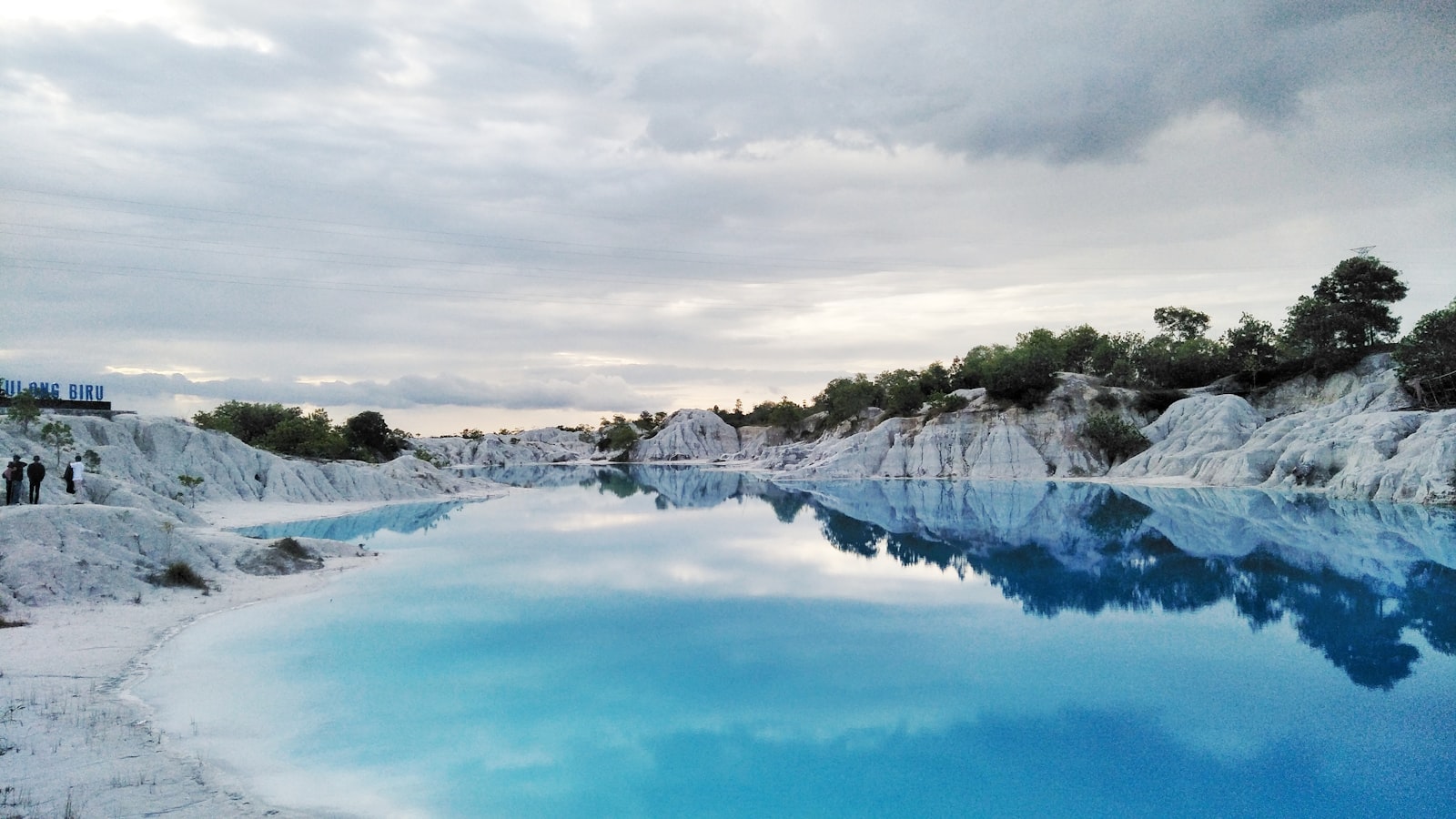
04The kaolin lakes inland — white banks, unreal blue water.
01
Time of day: early or late wins
Early morning:
Softer light and fewer people at Tanjung Tinggi and Kelayang.
Gentle shadows that show off the curves of the granite.
Late afternoon to golden hour:
Warm tones on the grey boulders.
Good for silhouettes around Tanjung Kelayang.
Harsh mid-day:
Best if your main goal is that tropical “bright turquoise” colour.
More risk of blown-out highlights on sand and water — use shade when composing, or angle slightly away from the sun.
02
Angles and compositions that work well
Loungers, a jetty, and not much else to do.
At Tanjung Tinggi:
Put a foreground boulder close to the lens, with the bay and horizon behind.
Climb (carefully) to a mid-level rock for a slightly elevated shot down the bay.
At Batu Berlayar:
Walk around and shoot the tall slabs from the sand, then from shallow water for reflections.
Use people in the frame for scale instead of waiting for an entirely empty shot.
At Kelayang:
Use offshore rock groups as mid-ground with textured clouds behind at sunset.
Frame boats between boulders for a sense of place.
03
Phone vs camera: what to bring
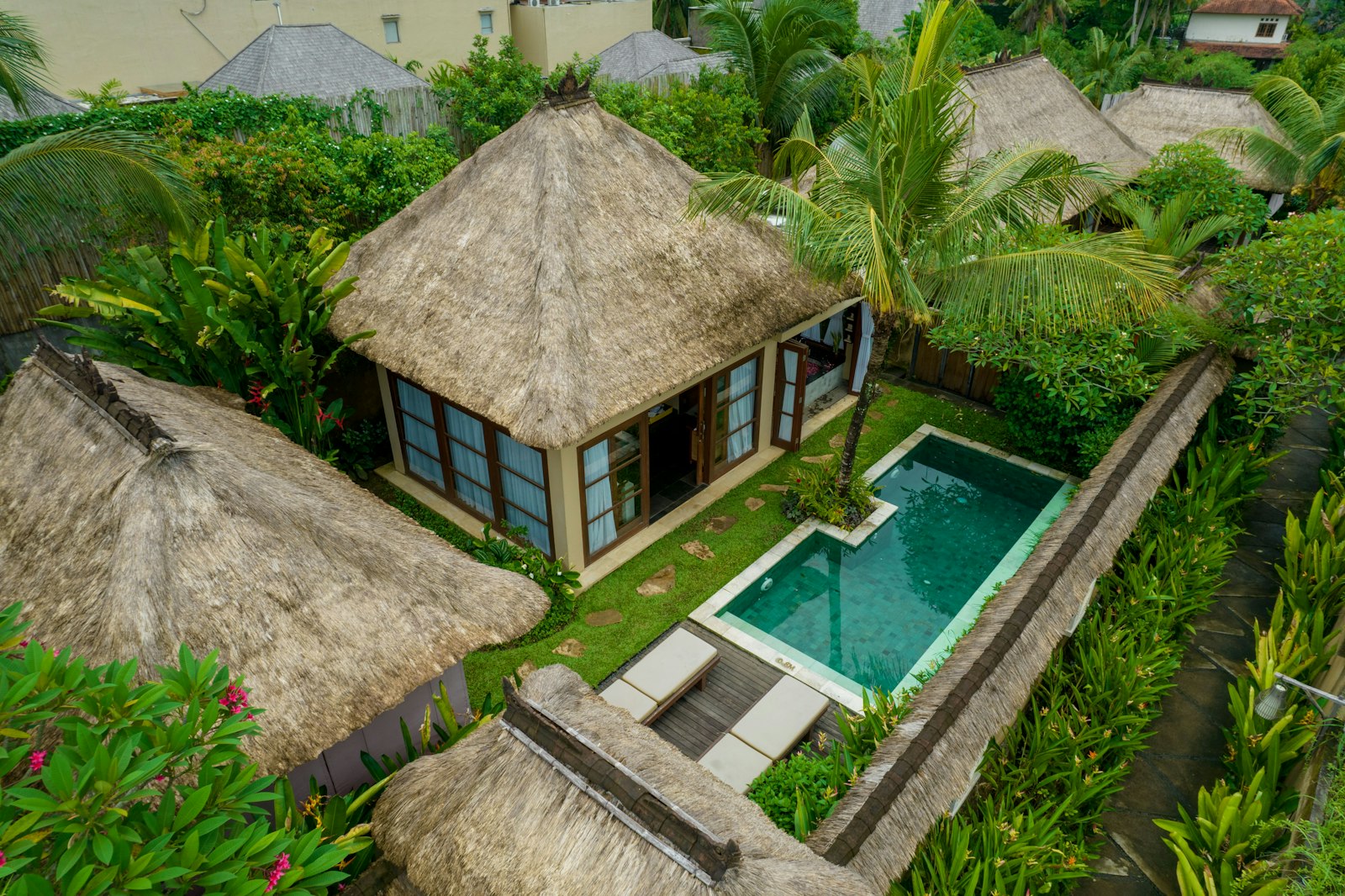
A long pool set into the garden of a beachfront villa.
Phone:
More than enough for daylight island hopping and casual portraits.
Use HDR carefully; sometimes it over-flattens the contrast on the rocks.
Dedicated camera:
Helpful if you want detail shots at dawn/dusk or play with long exposures on waves.
A polarising filter can deepen the water colour and reduce glare on wet granite [VERIFY].
Whatever you use, bring
A microfiber cloth: sea spray and sunscreen smudges show up quickly on lenses.
A dry bag for boat days: even if you don’t plan to get in the water.
Chapter 05
Swimming, Safety, and Seasons Around the Giant Rocks
Belitung’s boulder beaches look like natural water parks, but a bit of awareness keeps them fun and safe.
05Boulders the size of houses, right at the waterline.
01
Swimming conditions around granite boulders
A plunge pool tucked beside the pavilion.
In usual dry-season conditions
Inside Tanjung Tinggi’s bay:
Shallows are generally calm, especially on the inside curve.
Kids can play near shore with supervision.
Around Tanjung Kelayang:
Exposed sections can feel choppier and may have small boat traffic.
The ends of the beach near granite clusters often feel more sheltered.
Offshore on the islands
Most stops offer calm, shallow water where boats anchor.
Always check depth with your feet before jumping in near rocks: underwater boulders can surprise you.
We don’t list wave heights or current strength here, because they fluctuate with wind, season, and weather. Listen to local guidance on the day; conditions can change within hours.
02
Tide and rock access
Tide changes how “climbable” and “walkable” certain spots are:
Low tide:
Reveals more base rock and tide pools.
Lets you walk farther between clusters without swimming.
High tide:
Can isolate some boulders, turning them into mini-islands.
Cuts off certain passages you might see in other people’s photos.
You don’t need tide tables to enjoy the beaches, but if you’re targeting a specific shot (e.g. a certain rock bridge or path), message us your dates and we’ll cross-check realistic timing when you plan your trip.
03
Dry season vs rainy season: how much does it matter?
Period interiors of the kind the film crews used.
Belitung generally runs on a tropical pattern with a drier period around roughly May–September and a wetter one around November–March [VERIFY]. Shoulder months blur the lines.
What changes with seasons
Water clarity:
Often better and more stable in the drier months.
Sky:
Dry months bring more consistent blue-sky days.
Wet season has more dramatic clouds and sometimes heavy showers.
Sea conditions:
Island-hopping can be limited by wind or waves on certain days in the wetter months.
What doesn’t change
The boulders themselves: Belitung granite boulder beaches look good in both sun and overcast light; the character just shifts.
Basic accessibility to Tanjung Tinggi and Kelayang: you can visit year-round, but you may need to time around rain.
We never guarantee conditions or trip departures. Local skippers and partners make final calls based on safety for that day.
Chapter 06
Where to Stay for Easy Access to Belitung Boulder Beaches
You don’t need to sleep on top of a boulder to enjoy them, but location does change your day-to-day rhythm.
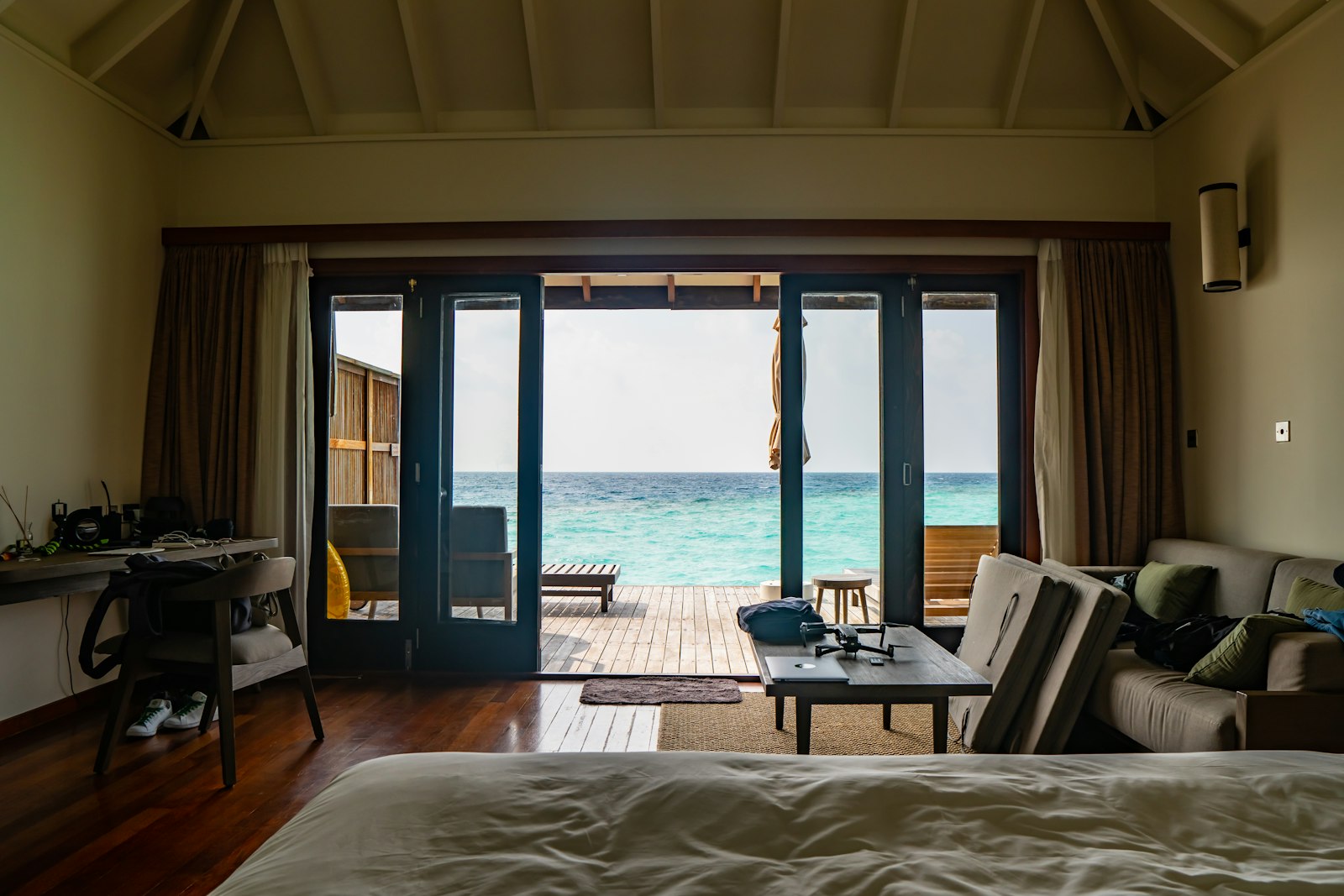
06Bedrooms open straight onto the deck in most beach villas.
01
Staying near Tanjung Tinggi & Tanjung Kelayang
Resort grounds run straight down to the sand.
Benefits
Short transfer times:
10–20 minutes to the key granite beaches in many cases.
Sunrise and sunset access:
Easy to pop out at golden hours, then retreat to your villa or resort.
Logistic simplicity:
Island-hopping departures and returns are smoother from this side of the island.
Trade-offs
Slightly farther from Tanjung Pandan town.
Evening options are more resort/villa-based than city-based.
Our role:
We’re not a booking engine or an operator with a warehouse of our own rooms.
We curate a small set of stays near the boulder beaches — from private villas to beachfront suites — and match you to a vetted partner who can hold dates and quote by range.
Pricing is always “by quote” and shifts with season, availability, and configuration, but as a rough guide (last verified June 2026):
Well-located mid-range hotels within an easy drive of the granite beaches might often start somewhere in the mid-USD double digits per night.
Villa-style or higher-end beachfront stays in this area can reasonably range into low-to-mid USD hundreds per night, especially for whole-villa bookings.
We use specific examples during private trip planning, not on-page, because inventory changes fast. No one can pay to change what we publish; if you proceed with our partner they may pay us a referral fee at no extra cost to you.
02
Staying in or near Tanjung Pandan town
Shaded pavilions for the hottest part of the day.
Why you might choose town instead:
Closer to the airport and local food options.
Often more variety in simple city hotels.
Trade-offs
Longer day trips (40–60 minutes each way by car) to reach the main Belitung granite boulder beach areas.
Less “walk out and you’re there” feeling; more of a commute model.
This can work well if:
You’re on a tighter budget and don’t mind driving.
You’re mixing work days in town with one or two big beach days.
For a quick reality-check on locations and drive times versus your specific flight schedule and priorities, you can WhatsApp us at +62 811 3941 4563 and we’ll sketch out a simple plan before we ever talk about booking.
Chapter 07
How We Help You Actually Plan a Boulder-Beach Trip
Our role at Belitung Villa is editorial and concierge-style, not that of a mass tour operator.
Here’s what that looks like in practice:
We:
Visit and re-check Belitung boulder beaches and islands in different seasons and tides.
Compare stays, not just list them — villas vs resorts vs town hotels.
Connect you with vetted local partners who:
Don’t just push a single property they own.
Are comfortable customising around your pace and interests (e.g. more time on offshore granite, less souvenir time).
You:
Tell us your dates, group size, and what matters more: photography, swimming, kid-friendliness, or quiet.
Get a short-list of stay options with indicative price ranges and honest trade-offs.
Decide if you want to proceed with a partner we trust.
If you’re ready to move from inspiration to logistics, plan your trip with us or send a WhatsApp message to +62 811 3941 4563 and mention “granite boulder beaches” in your first line so we know where to start.
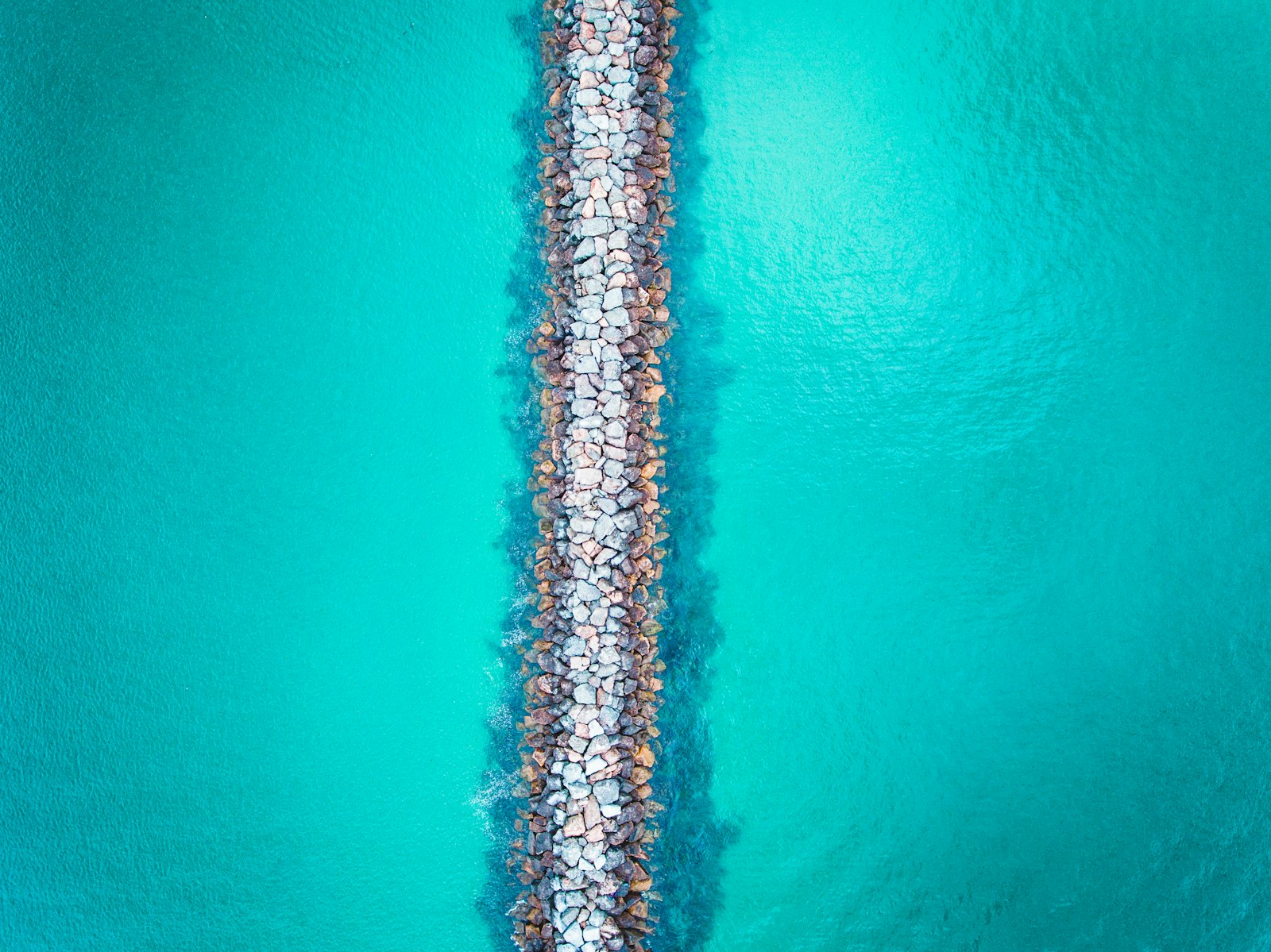
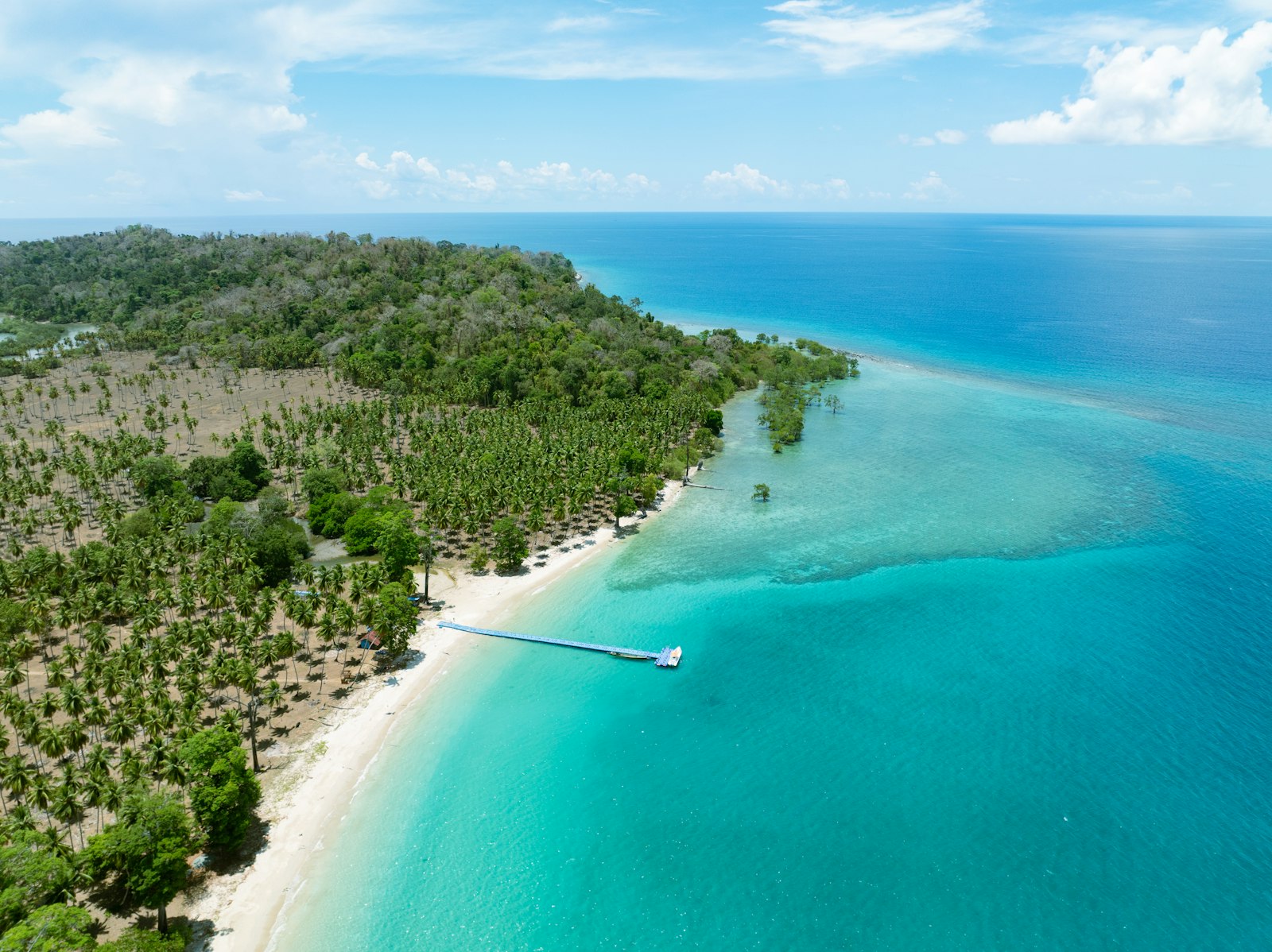
07Palms, white sand and wade-deep turquoise, seen from above.
Questions & Answers
Frequently Asked Questions
Are all Belitung beaches full of big boulders?
No. Some coasts are mostly sand with only small rocks, while the most iconic clusters of giant granite are concentrated around Tanjung Tinggi, the Tanjung Kelayang area, and several offshore islands like Lengkuas and Batu Berlayar.
Do I need to book island-hopping in advance to see the offshore boulders?
In quieter periods you may find a boat on the day, but in local holidays and drier months it’s smarter to reserve through a trusted operator. We help match you to vetted partners who can align departure times with tides and your granite-photo priorities.
How many days should I spend in Belitung to enjoy the granite boulder beaches properly?
Two full days lets you see Tanjung Tinggi, Tanjung Kelayang, and do one island-hopping trip. Three to four days give you breathing room for different light, tide timings, and a slower pace around the main Belitung granite boulder beach areas.
Can I climb the granite rocks Belitung is famous for?
You can scramble onto many lower and mid-height boulders, especially at Tanjung Tinggi and some islands, but there are no formal climbing routes or safety gear. Surfaces can be smooth and slippery, especially when wet, so move slowly, wear decent footwear, and avoid risky heights.
Is Belitung safe for children around the boulder beaches?
The calmer bays, especially at Tanjung Tinggi in normal conditions, can be child-friendly with close supervision. The same boulders that create shallow pockets can also hide sudden drop-offs and slippery sections, so keep children within arm’s reach near rocks and follow local advice on the day.
Tell us what you have in mind. We reply on WhatsApp with a curated villa/resort shortlist plus island-hopping and an indicative quote, and arrange your booking through our vetted operating partner. Concierge, not operator.